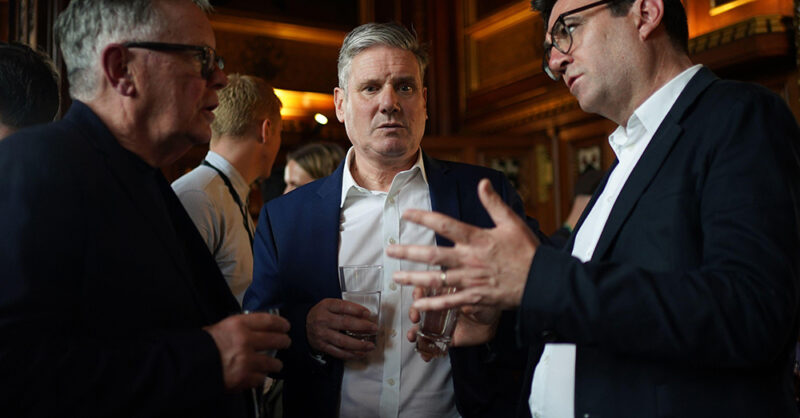
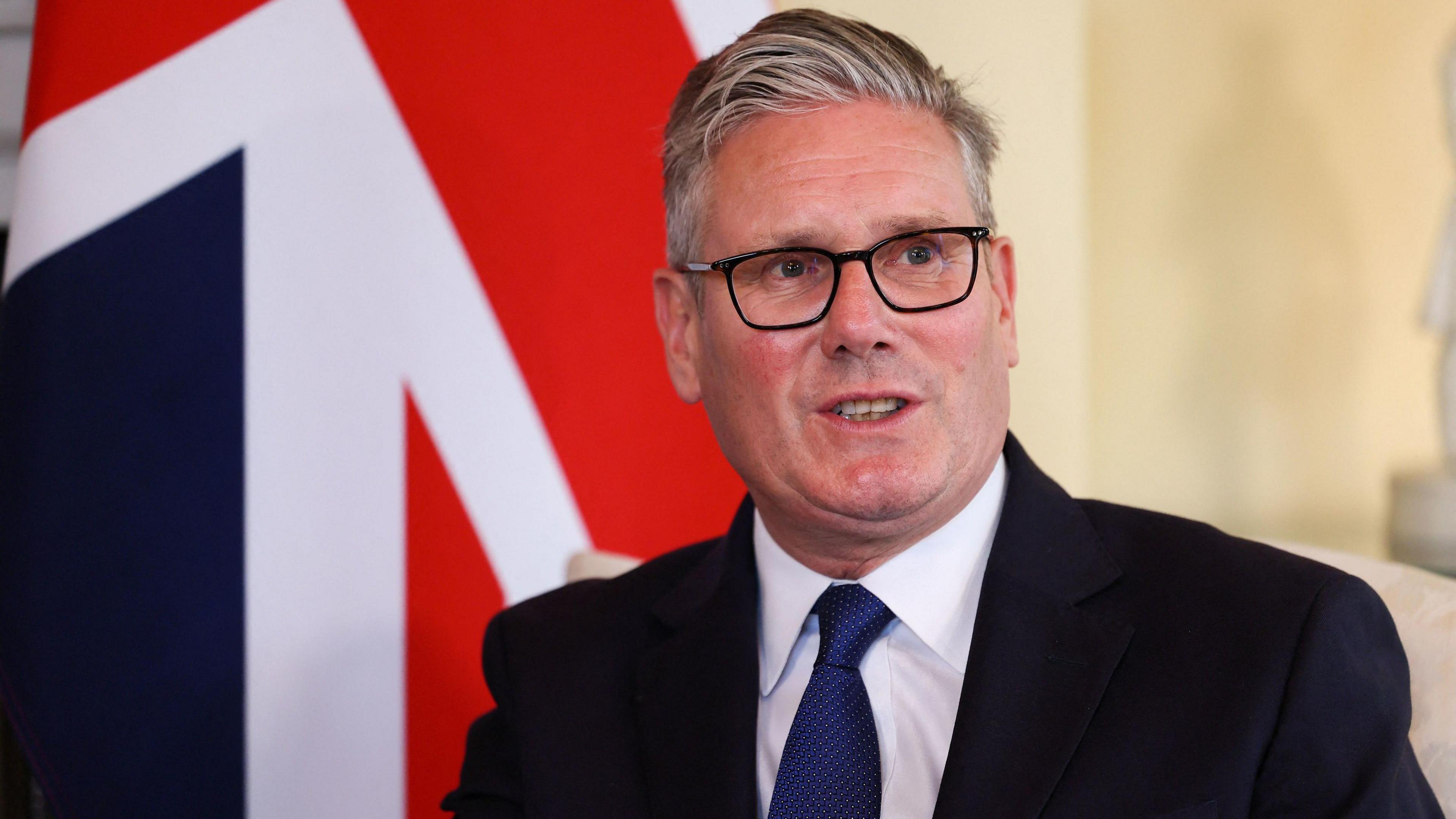
Breaking news has erupted within the UK Labour Party as a fierce internal conflict unfolds, threatening to destabilize Keir Starmer’s leadership amid plummeting approval ratings and mounting public scrutiny. Speculation intensifies that Andy Burnham, Greater Manchester’s mayor, is quietly maneuvering a political comeback by eyeing a parliamentary seat, setting the stage for a dramatic civil war within Labour just months after taking power. Tensions spike as party officials scramble to contain the fallout.
 The Labour leadership is under unprecedented strain after months of declining public confidence. Keir Starmer’s historic parliamentary majority now looks frail as economic woes, immigration controversies, and scandals batter the party’s image. This turmoil has ignited fierce rivalries behind closed doors, with factions lining up either in support of or opposition to Starmer’s continued reign.
Andy Burnham’s sudden reemergence into whispers about Westminster has electrified the political arena. Allies are reportedly compiling lists of target constituencies in the Northwest, including seats once held by former MPs, intensifying rumors Burnham is preparing a calculated bid to challenge Starmer. His cryptic social media response to these rumors—dismissive yet evasive—only fuels speculation.
Burnham’s ambiguous denial, describing media reports as “rubbish” without explicitly refuting his ambitions, sends a clear signal: the former health secretary and mayor is far from ruled out as a future Labour leader. This non-denial denial has created a political tinderbox. Analysts warn Burnham’s silent manoeuvres could destabilize Labour’s fragile unity ahead of crucial local elections.

Compounding the crisis, Home Secretary Shabana Mahmood publicly acknowledged that every Labour politician contemplates the prime ministership privately. Her candid admission on Sunday shows the depth of ambition simmering within the party’s ranks. Yet, Mahmood urged colleagues to “get back to work” and dismissed talk of leadership plotting as overblown.
However, her invocation of divine intervention—“for God’s sake”—illustrates the extraordinary defensive posture Labour leaders have adopted. It signals growing desperation to maintain cohesion as party insiders leak sensitive information, undermining public trust. Mahmood underscored Labour’s rare grip on government and the critical importance of preserving it, highlighting internal contradictions exposed by the infighting.
Labour’s rapid fall from grace has transformed what was once a united front into a battlefield of surging discontent and political intrigue. Recent polls reveal a catastrophic erosion of support, threatening the party’s prospects in the upcoming May local elections—traditionally a key indicator of public sentiment toward the government.
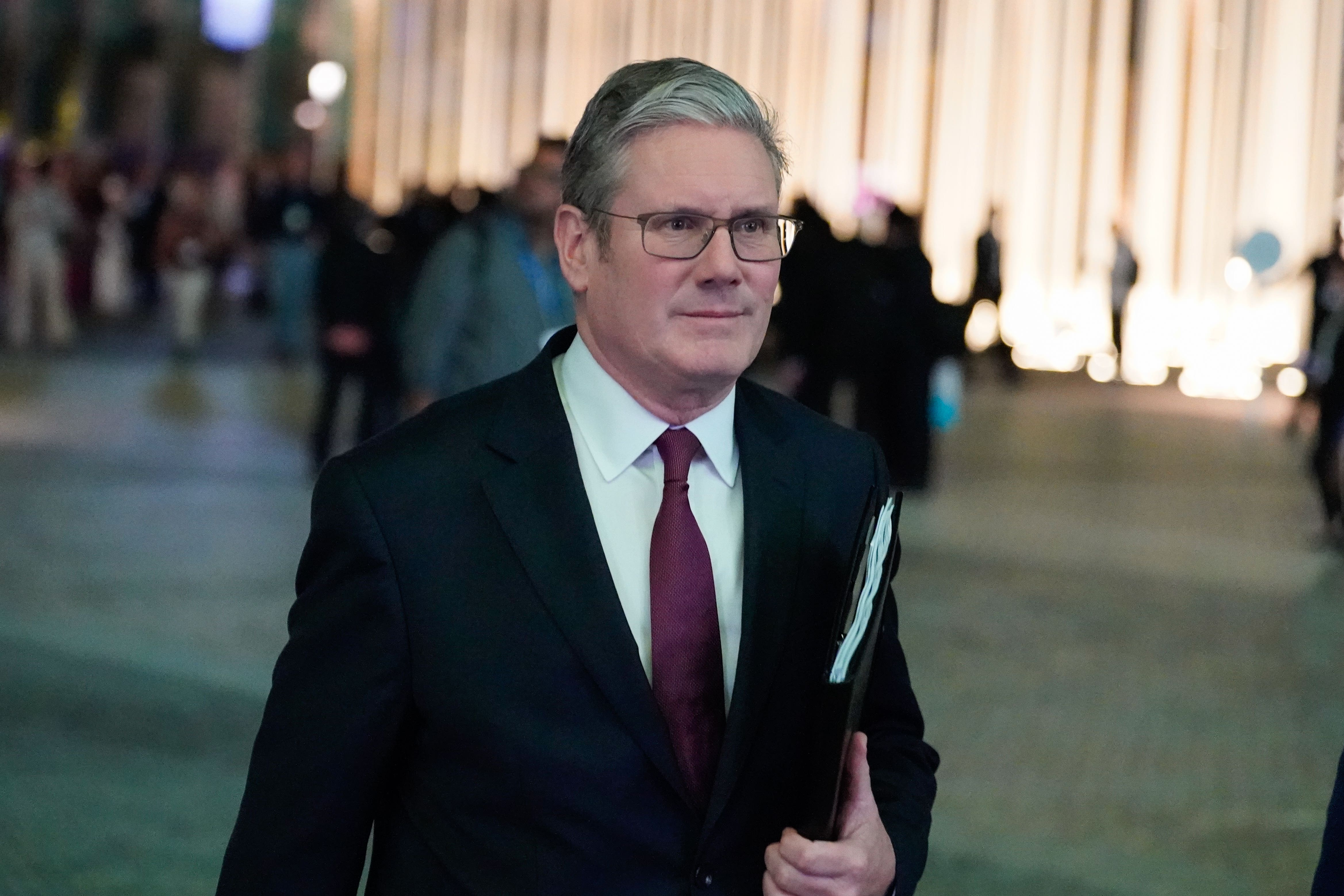 Political insiders now predict a leadership challenge poised to explode post-elections if Labour suffers significant losses. Burnham’s strategic positioning ahead of this timetable suggests he is ready to capitalize on Starmer’s vulnerabilities. This looming confrontation promises to reshape the party’s future and ignite a fight for control that could consume Labour’s focus.
Starmer, meanwhile, faces a critical juncture. Once hailed as the saviour of Labour, his leadership credibility has been hammered by relentless criticism over policy failures and scandal fallout. The mounting pressure tests his ability to unify an increasingly fractured party with rival ambitions circling like vultures.
Burnham’s return, or potential return, to Westminster represents more than just a leadership bid—it symbolizes deep dissatisfaction within the party’s rank and file. The scale of the infighting threatens to distract Labour from governing effectively, just as the opposition eagerly waits to exploit every fissure in their armour.
This internal storm is unfolding amid a national backdrop of economic uncertainty and voter disillusionment, further complicating Labour’s governance. The party’s message of stability and competence now rings hollow to many as chaos brews beneath the surface, risking long-term damage to its electoral fortunes.
As the political drama intensifies, all eyes will be on the May local elections, which will act as both a referendum on Labour’s current stewardship and a trigger for change in leadership dynamics. The party’s survival may hinge on rapid damage control and whether Starmer can quell the brewing mutiny.
The stakes have never been higher. Labour’s civil war threatens not only its position in power but the future direction of UK politics. This crisis has shattered illusions of unity, revealing stark divides that could lead to a seismic reshuffle within the party’s hierarchy.
Observers warn that if Labour fails to present a united front swiftly, it risks handing the opposition, and the country’s uncertain future, to Conservative rivals hungry for power. The coming weeks will be decisive in determining if Labour can stem the bleed or implode from within.
This unprecedented crisis serves as a stark reminder that political dominance is fragile. The internal battle gripping Labour underscores the volatility of modern UK politics, where leadership is as much a prize as a target. The unfolding civil war is a defining moment destined to alter the course of the Labour Party dramatically.